
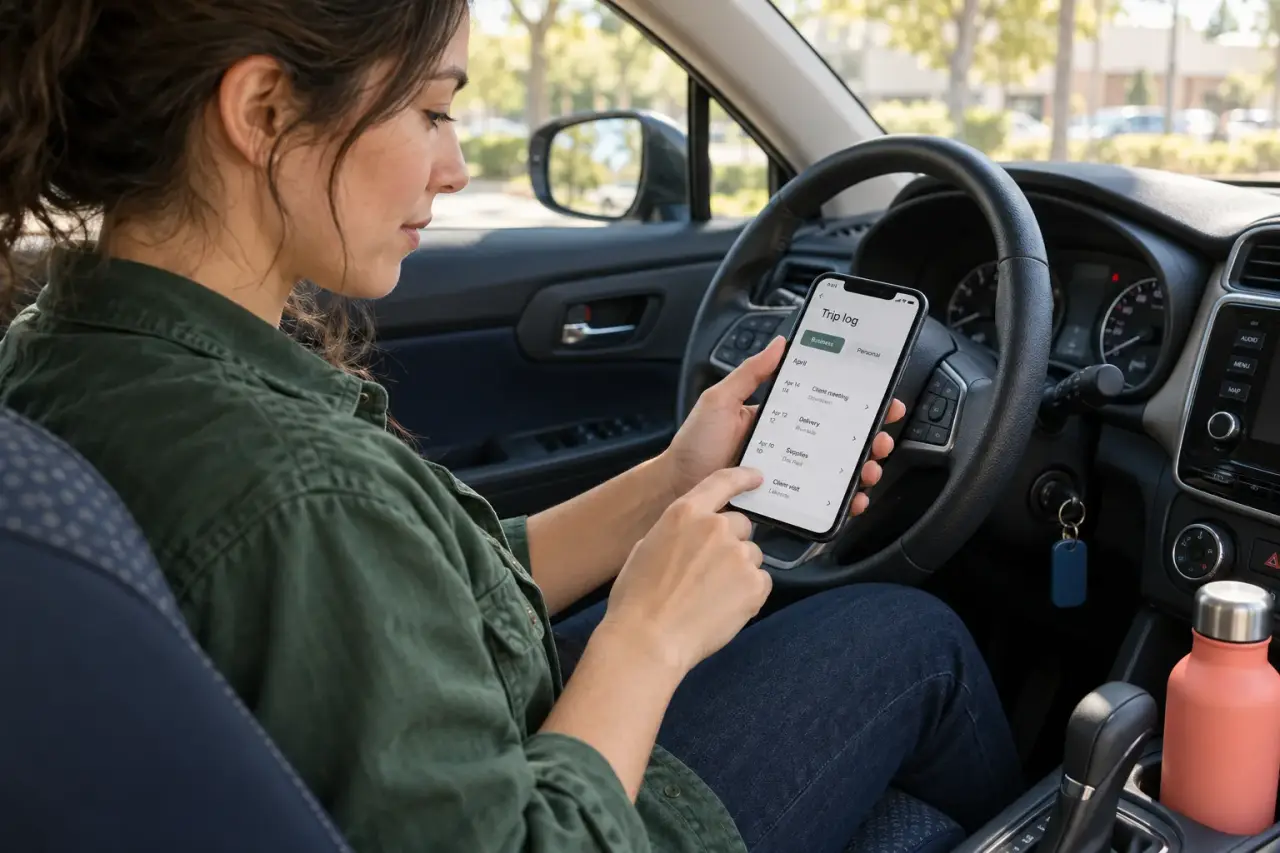
If you drive for DoorDash, Uber, Instacart, or any other gig job, your car is probably your single biggest tax deduction. But the IRS doesn't just take your word for how many miles you drove. It wants proof, kept the right way, or it can throw the whole deduction out.
Here's what "the right way" actually means in 2026.
The rule the IRS cares about most: contemporaneous records
The IRS word for this is "contemporaneous," which just means your log has to be created at or near the time you actually drove, not pieced together months later from memory. The IRS requires contemporaneous mileage records — logs created at or near the time of each trip, not reconstructed from memory weeks or months later, and a mileage log rebuilt at year-end from rough estimates does not satisfy IRS documentation.
That doesn't mean you have to log every single trip the second it ends. Several tax guides suggest that updating a mileage log on a weekly basis is generally considered timely enough to meet the contemporaneous standard, though the IRS itself doesn't specify an exact interval. — so you don't need to log every trip the moment it ends, as long as you're not waiting until April and guessing.
What information does each trip need?
Whatever you use to track mileage — a notebook, a spreadsheet, or an app — each trip needs the same basic information: the date, where you went, why it was for business, and how many miles it was. The IRS requires contemporaneous mileage logs documenting date, destination, business purpose, and miles driven.
A few things worth knowing about what counts:
Commuting doesn't count. Driving from your home to a regular job site, or sitting idle waiting for your first gig order of the day in the same spot you always start from, is generally treated as commuting, not business driving, and the IRS does not consider personal expenses like costs related to commuting tax deductible or eligible for reimbursements.
"Business meeting" isn't a good enough description. Vague notes get questioned in an audit. Write down the actual reason — which platform, which delivery, which pickup.
You need a yearly total, too. On top of each trip, keep your odometer reading (or an app's running total) from the start and end of the year, since that's what establishes what share of your total driving was for business.
Why does 2026 have an extra step?
Most years, the IRS sets one mileage rate in December and it holds for the whole next year. 2026 is different. The IRS announced in late December 2025 that the business standard mileage rate would be 72.5 cents per mile, up 2.5 cents, beginning January 1, 2026 (see IRS.gov for the official notice). Then, mid-year, fuel costs pushed the IRS to act again. The IRS made a rare midyear change to the standard mileage rate due to high fuel prices, announcing on July 13 that the business rate would rise to 76 cents per mile from July 1 through December 31, 2026 (check IRS.gov for the current figure before filing).
That means your 2026 log can't just show one yearly total. It needs to show which miles happened before July 1 and which happened after, since the standard mileage rates for 2026 are 76 cents per mile for July 1 through December 31, and 72.5 cents per mile for January 1 through June 30 (confirm current rates at IRS.gov). If your tracking app or spreadsheet only spits out an annual number, pull a mid-year report before you file so you can apply the right rate to the right half.
How do you pick a tracking method?
You don't need anything fancy. What matters is consistency.
A GPS mileage app automatically timestamps and logs each trip, which makes it easy to meet the contemporaneous rule without thinking about it.
A notebook kept in the car works fine too, as long as you actually fill it in regularly instead of letting a month pile up.
A spreadsheet is a middle option — just update it the same day or same week you drive, not at tax time.
Whichever you pick, the standard mileage rate is the simpler of the two deduction methods available to most gig workers, since it folds gas, maintenance, insurance, and depreciation into one number — you just multiply miles by the rate. The alternative, deducting actual vehicle expenses, requires receipts for every cost on top of the mileage log, which is more paperwork for most delivery and rideshare drivers.
How long do you need to keep mileage records?
Once tax season passes, don't toss the log. Keep your mileage records for at least three years from the date you file the return that includes the deduction — longer if you significantly underreported income in that year, per IRS recordkeeping guidelines. If the IRS ever asks questions about a prior year's return, your log is the only thing standing between you and losing the deduction.
The bottom line
Tracking mileage isn't about perfection — it's about habit. A quick note after each shift, the date, the destination, and the reason, beats a flawless-looking spreadsheet built from memory in April every single time. And in 2026 specifically, remember the rate changed partway through the year, so your records need to show when you drove, not just how far.
Once you know your deductible miles, that number flows straight into your Schedule C and into figuring out what you actually owe — and many gig workers find it easier to set aside a portion as they earn, rather than facing a surprise at tax time.
This article is for general information only and isn't tax advice. Mileage rules and IRS rates can change — check IRS.gov or talk to a tax professional before filing.