
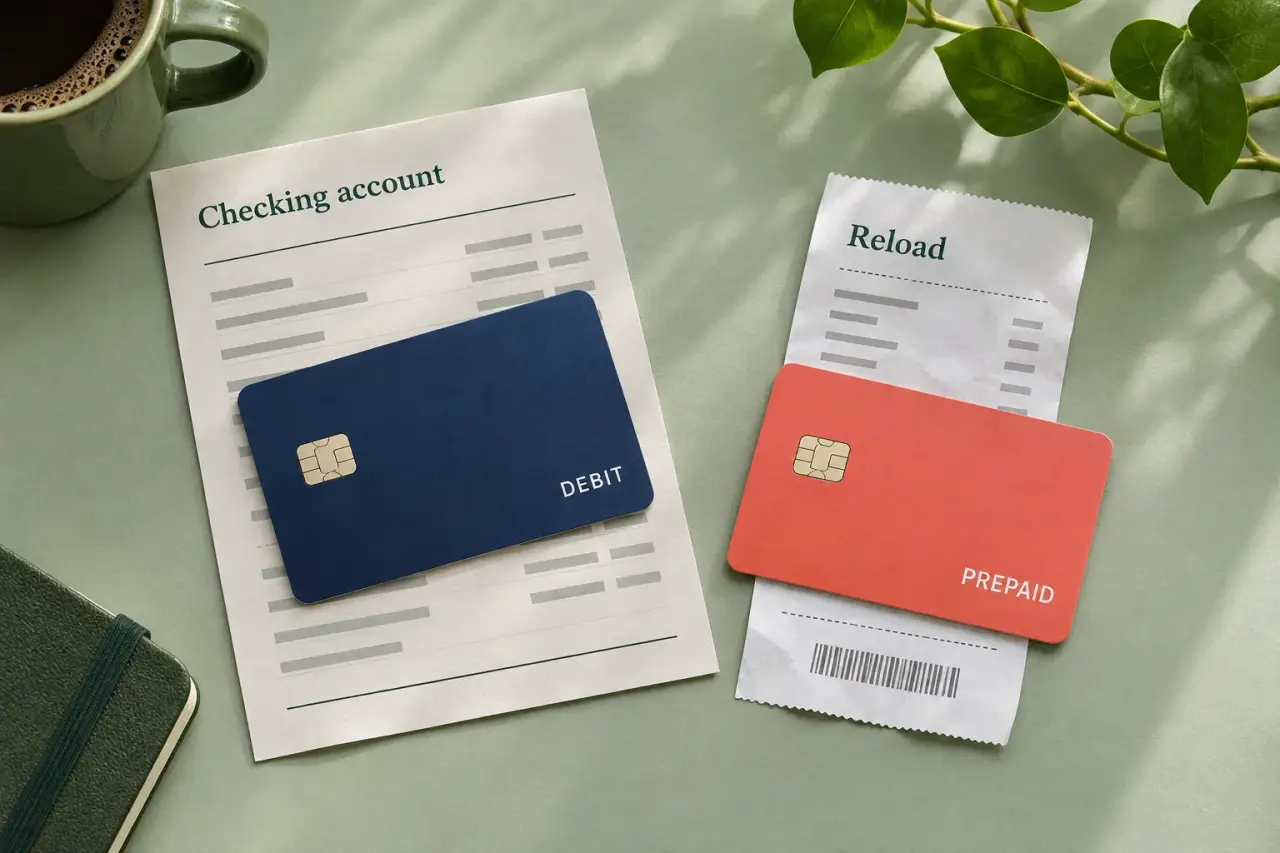
They look the same at the register, but they aren't the same product
Swipe a debit card or a prepaid card at the store, and the checkout screen doesn't know the difference. Both run on Visa or Mastercard networks. Both decline if there's no money left. But where that money lives — and what happens if your card gets lost or stolen — is where these two products split.
What is a debit card? Tied to a bank account
A debit card is linked directly to a checking account at a bank or credit union. When you spend, money comes straight out of that account. To get one, you generally need to open a bank account first, which usually means providing ID and sometimes passing a screening check.
The payoff for that setup is stronger legal protection. Debit cards come with strong protection under federal law. That's because money in a bank account is typically FDIC-insured, and debit card transactions fall squarely under a federal rule called Regulation E, which limits what you can lose if your card is used without your permission — as long as you report it in time.
What is a prepaid card? Money loaded on a card, no bank account needed
A prepaid card isn't tied to a checking account at all. You load money onto it — through direct deposit, cash at a store, or a transfer — and spend down that balance. Prepaid cards don't require a bank account, while debit cards do. That makes prepaid cards an option for people who've been turned down for a checking account or just want to keep their spending separate from their main bank.
For a long time, prepaid cards lived in a legal gray area. Prepaid cards had far fewer regulatory protections than bank accounts or debit or credit cards. That changed with a federal rule from the Consumer Financial Protection Bureau that took effect in 2019. The rule gives prepaid card and account users protections that are common on other forms of electronic payments, like credit cards and debit cards, while preserving features like the ability to control spending and avoid overdraft fees.
Do you have to register a prepaid card to get fraud protection?
Here's the part a lot of people miss. The new protections on prepaid cards aren't automatic — they only kick in once you register the card with the issuer. Prepaid cards and mobile or internet-based accounts receive the same protections from fraud, unauthorized charges, and errors that debit cards connected to bank accounts have had, but the card must be registered on the issuer's website to receive these protections.
Skip that step, and you're taking a real risk. A gift-store-style prepaid card that's never been registered is treated close to cash — general-purpose reloadable prepaid cards that are unregistered are essentially cash, and if stolen, the money is gone. Registering usually takes a few minutes online or in an app and just means confirming who you are.
Is a prepaid card FDIC-insured?
With a debit card, your money sits in an FDIC-insured bank account, full stop. With a prepaid card, it depends on the issuer. Some prepaid programs pass through FDIC insurance via a partner bank; others don't make that promise at all. Consumers should know whether or not their funds are protected by FDIC insurance, and the status of that insurance can vary by issuer. If you're relying on a prepaid card for most of your money, it's worth checking the card's terms or website for that detail specifically.
Do prepaid cards have higher fees than debit cards?
Because prepaid card programs aren't banks, many build their revenue around fees rather than interest or overdraft income. Consumers are charged a multitude of fees, depending on which prepaid card they choose, including fees for loading money on the card, for using the card, for not using the card, monthly fees, ATM fees, customer service fees and more. Regulators now require issuers to disclose those fees in a standard format, but it's still smart to read that chart before you pick one up off a store rack.
Does a debit card or prepaid card build credit?
This is true across the board: neither prepaid cards nor debit cards help build credit, because neither involves borrowing or reports to the credit bureaus. If building credit history is part of your goal, you'll need a different tool, like a secured credit card or a credit-builder loan.
Quick way to tell which one you're holding
If it's tied to a checking account you opened at a bank or credit union — that's a debit card.
If you loaded money onto it directly, bought it at a store, or got it in place of a paycheck with no bank account behind it — that's a prepaid card.
Either way, if it's prepaid, register it. That single step is what turns on your fraud protection.
Both products can get you paid and let you spend without a credit check. The difference is mostly about what's standing behind the card if something goes wrong — and for prepaid cards, how much of that protection you've actually switched on.
If you're trying to decide how to manage your gig or hourly paycheck day to day, a checking account with a debit card attached generally gives you the deepest set of built-in protections without any extra steps.