
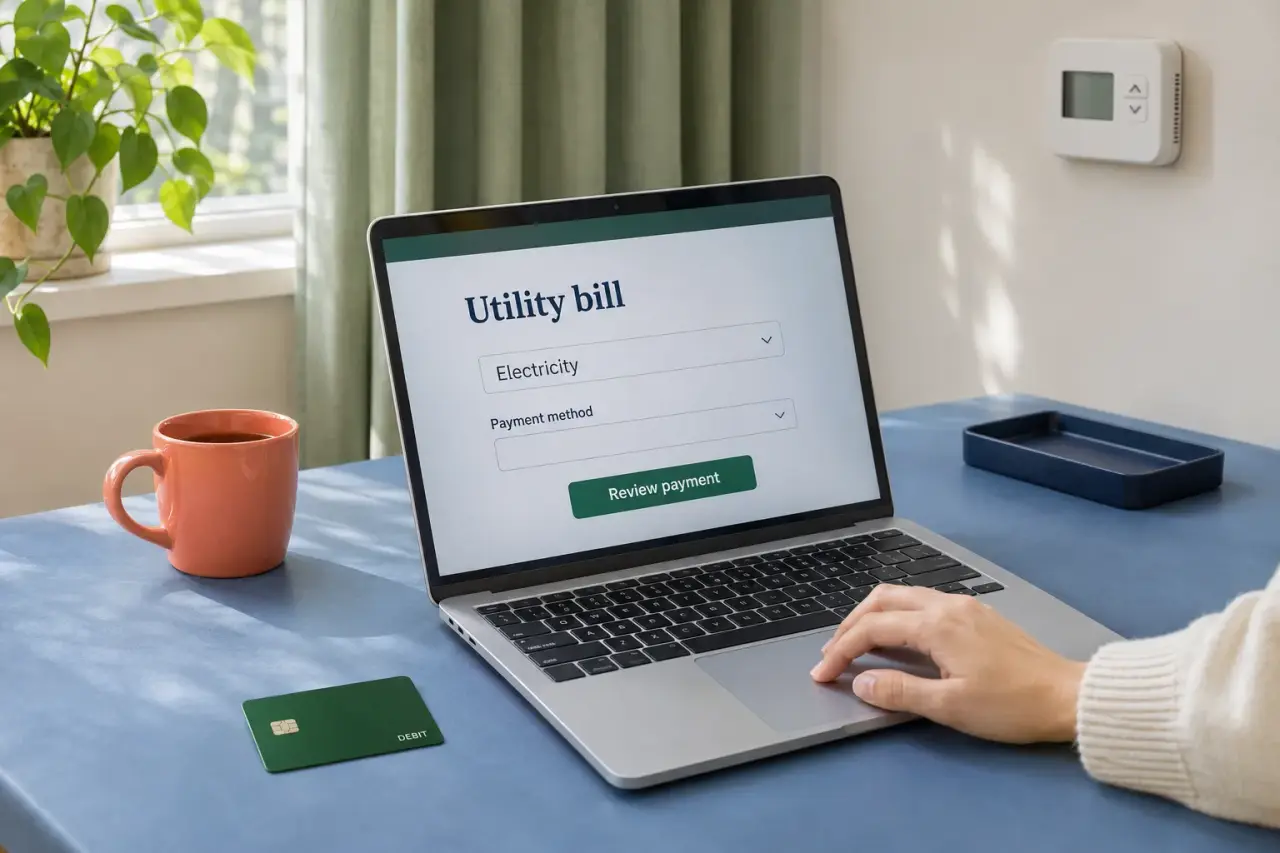
Can you really get cash back on utility bills?
Yes. Most electric, gas, water, phone, and internet providers let you pay with a card, and if that card earns cash back, the bill counts like any other purchase. Utilities such as electricity, gas, water, phone, cable and internet services can potentially qualify for cash back rewards, and cards like the Chase Freedom Unlimited and Chase Freedom Flex offer rewards on all purchases, including utilities.
Some cards go further. Cardholders of the U.S. Bank Cash+ Visa Signature Card can earn up to 5% cash back on utilities by selecting "Home Utilities" as a 5% cash back category, and up to 5% on a cell phone bill by selecting "Cell Phones" as a second bonus category. Other cards, like the Huntington Voice Credit Card, let you pick "Utilities & Office Supply Stores" as a bonus category, which works out to 3X points per $1 spent paying bills, worth an effective 3% back on utilities.
So on paper, putting your power bill on the right card sounds like free money. The catch is what happens between you and the utility company.
The convenience fee problem
A lot of utility companies don't absorb the cost of accepting cards — they pass it to you. Most utility companies will charge a convenience fee for paying with a credit card, usually 2% to 3% of the bill or a flat rate ranging from $1.50 to $4. Some charge even more: according to the National Association of State Utility Consumer Advocates, those fees can range from $1.50 to $5.85 per transaction.
That fee can erase whatever you'd earn. One breakdown put it plainly: if your card earns 1.5 percent cash back but the fee is 2.5 percent, you lose 1 percent on every payment — on a $200 electric bill, a $5 fee costs more than the $3 you would earn at 1.5 percent back. Flat fees change the math depending on your bill size. A flat fee changes the math on larger bills — a $2 flat fee on a $400 bill is only 0.5 percent, so a 2 percent rewards card would still come out ahead.
This isn't a small detail for most people. More than 75% of utility companies charge a convenience fee for paying your bill with a credit card. Financial writers who've run the numbers agree the fee usually wins: often, these convenience fees total more than the credit card rewards you can earn by paying the bill.
Do the math before you switch
Before you change how any bill gets paid, do one simple check:
The three-step check for whether card payment is worth it
Log into your provider's account or call them and ask exactly what a card payment costs.
Multiply your card's cash back rate by the bill amount.
Compare the two numbers. If the fee is bigger than the reward, paying by card loses you money every single month.
One guide summed up the move well: pull up one recent utility bill, find the exact card fee, and compare it to your card's reward rate — if the fee wins, a free bank transfer is usually the better move.
Fees vary a lot by provider and even by location. Pacific Gas and Electric Company in California, for example, charges up to $1.35 when customers pay their bills with a credit or debit card. That's small enough that most rewards cards beat it. A different provider could charge several dollars more, and suddenly the math flips.
If you don't want to carry a credit card
A lot of gig and hourly workers would rather not run a balance on a credit card at all, and that's reasonable — carrying one comes with its own risk. Cons of using credit cards for utilities include utility companies charging convenience fees as percentages of bill amounts, plus a cardholder accruing high-interest debt if the full balance isn't paid each month. If you're using a debit card instead, the fee question still applies — check it the same way, since many providers charge the same convenience fee whether you swipe a credit or debit card.
Some newer banking and cashback apps now let you earn a flat percentage back on everyday debit spending, without you needing to track rotating categories or activate anything each quarter. If you already bank with one of these apps, it's worth checking whether your regular bills — not just groceries or gas — count toward your cash back, since terms vary by provider. The same category-hunting logic applies to other everyday spending, like finding the best cash back apps for Uber and Lyft rides.
A few other things worth knowing
What if your provider doesn't take cards directly?
Not every provider takes a card at all. Whether your home utilities provider offers credit cards as a valid form of bill payment is a toss-up — your best bet is to assume they accept cards, but with an additional convenience and processing fee. Some people get around this with a third-party bill-pay service, but those come with their own cost. Services like Plastiq let you pay with a credit card and they'll pay your utility bill using a check or money transfer, but Plastiq charges a 2.9% fee on every transaction — similar to what many utility providers already charge. That almost never pencils out for cash back purposes.
Are there benefits beyond the cash back itself?
It's not just about the rewards. Paying utilities on a card you manage carefully can have side benefits. On-time credit card payments for utilities may positively impact credit scores while earning cash back rewards, and automatic payment set-up, convenient tracking through statements, and dispute resolution are possible benefits of using credit cards for utilities. But none of that is worth much if you're paying interest because the balance didn't get paid off. Your credit card isn't an ideal choice for paying a utility bill if the rewards you'd earn from the payment don't outweigh any fees and interest you'd accrue on the card balance. If a tight month makes a utility bill hard to cover without carrying a balance, it may be worth looking at cash advance apps for gig workers instead of letting interest pile up.
The bottom line
Cash back on utility bills is real, and a handful of cards specifically reward it. But the convenience fee most providers charge is often bigger than the reward, so the smartest move isn't picking the card with the highest advertised rate — it's pulling up one bill, finding the exact fee your provider charges, and doing the arithmetic yourself before you change anything on autopay.
If the fee wins, a regular bank transfer costs you nothing and keeps the bill paid on time, which matters more than a point or two of cash back ever will.