
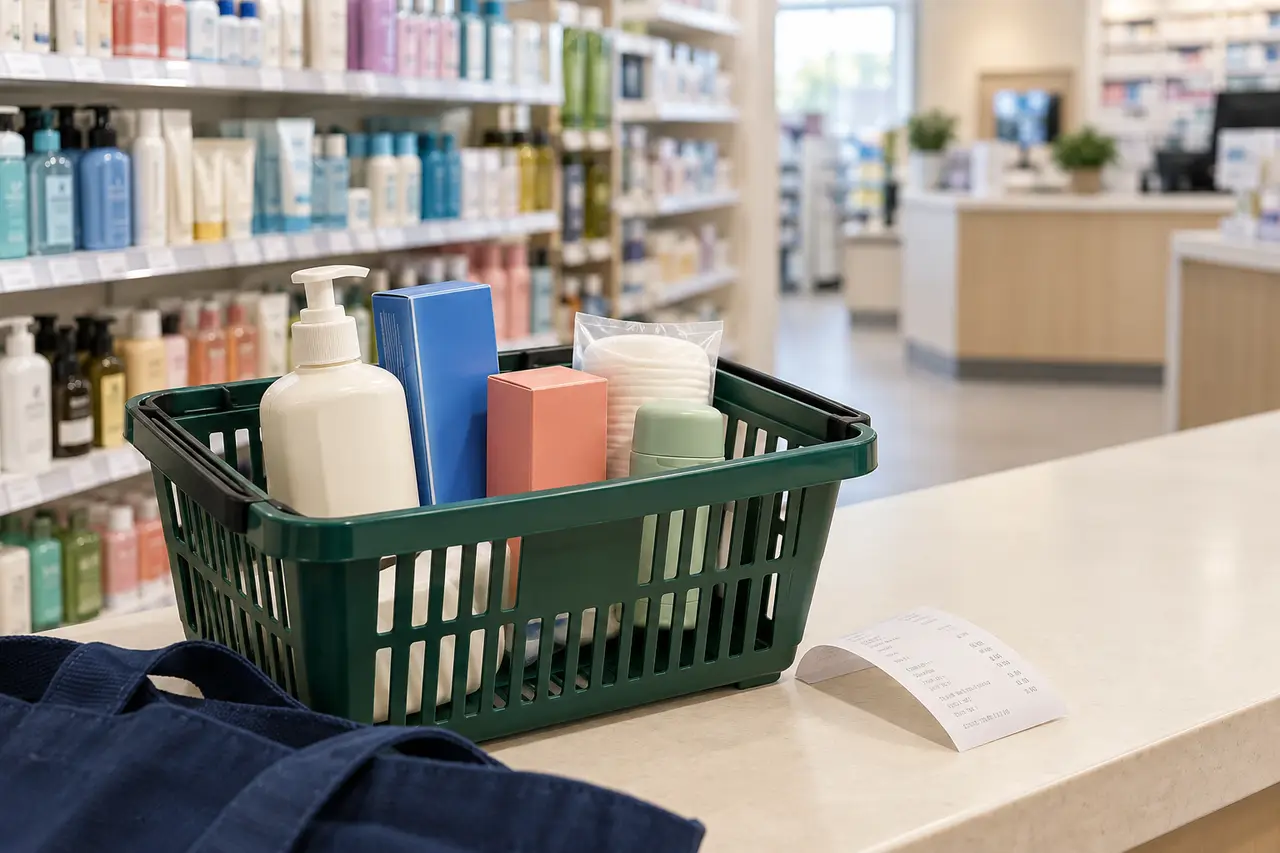
The drugstore run adds up more than you think
A trip to CVS or Walgreens never seems like a big purchase. A bottle of Tylenol, some shampoo, a pack of gum at checkout. But those small trips happen often, and they're exactly the kind of everyday spending that cash back apps are built for.
The tricky part is that pharmacy purchases have more rules than a regular grocery trip. Prescriptions, copays, and a few other items usually don't earn cash back anywhere — not from the stores themselves, and not from the apps. Here's what actually works.
Start with the store's own loyalty program
Before you even open a third-party app, it's worth signing up for the pharmacy's own rewards program, since it's free and stacks with other apps. (See also CVS's own return and rewards rules for how ExtraBucks interacts with returns and receipts.)
CVS ExtraCare gives 2% back in ExtraBucks on most purchases, applied quarterly. There's also a separate pharmacy credit system: you earn one credit for filling a prescription or getting an immunization at the store, and for every 10 credits you earn, you get $5 in ExtraBucks rewards.
Walgreens' myWalgreens program works a little differently. It offers 5% back on Walgreens brand items, including OTC medications. All other purchases give you just 1% back, but that includes pharmacy orders. If you carry the store's credit card, you get 10% Walgreens Cash rewards on Walgreens brands and 5% Walgreens Cash rewards on other brands and prescriptions at Walgreens.
Just know there's a cap. Rewards promotions based on prescriptions or other pharmacy purchases are limited to $65 Walgreens Cash rewards per calendar year, and a handful of states are excluded entirely.
What does NOT earn rewards
This is the part people get tripped up on. At CVS, ExtraBucks cannot be used to purchase alcohol, gift cards, lottery, money orders, postage stamps, prepaid cards, prescriptions or tobacco products — meaning you can't spend your rewards on a refill, even though filling one can earn you credits in the first place. Several states also don't participate in pharmacy rewards at all: rewards cannot be earned for prescriptions purchased in Arkansas, New Jersey or New York; on any prescriptions for controlled substances purchased in Hawaii or Louisiana; or on any prescriptions transferred to a CVS Pharmacy in Alabama, Mississippi, or Oregon or Tennessee.
The lesson: treat prescription copays as a separate transaction from the shampoo, snacks, and OTC stuff in your basket. The front-of-store items are where cash back apps do their best work.
Ibotta: best for specific drugstore items
Ibotta is built around activating offers before you shop, then getting paid when you buy the matching product. Before you shop, you browse available offers and activate the ones you want. When you buy those specific items and scan your receipt, you get the cashback listed on the offer. Payouts for pharmacy-type items — vitamins, pain relievers, personal care — vary a lot by offer: think small amounts like a quarter for everyday staples, up to several dollars for trying a new product.
Ibotta covers drugstores directly. You can use Ibotta at retailers like Walmart, Target, Kroger, Publix, Walgreens, and CVS. It also supports linked loyalty cards so you don't have to scan a receipt every time: you can activate offers in-app and link loyalty for auto-credit, or scan the receipt after the purchase.
The catch is the payout threshold. Ibotta pays out via PayPal, Venmo, or gift card with a $20 minimum, and payments typically land within 24-48 hours. If you're only making the occasional drugstore run, it can take a while to hit that floor.
Fetch: zero effort, smaller payouts
If you don't want to hunt for specific offers before you shop, Fetch is the simpler option. Fetch is an "any-receipt" app — scan any receipt from any store and you'll earn points, no questions asked, regardless of what you bought or where you shopped. That includes drugstore and convenience store receipts.
The downside is the math. Points convert to gift cards at roughly 1,000 points per dollar (Fetch sometimes runs promotions that boost this), and the whole scanning process takes maybe 10 seconds. Per-receipt earnings for a small drugstore trip are modest, but the minimum payout is just $3 in points, so you can cash out much sooner than with Ibotta. Fetch pays only in gift cards, not cash to your bank account.
Rakuten: better for online drugstore orders
Rakuten doesn't do much for an in-person CVS run, but it's useful if you order from a pharmacy's website or app. Rakuten is the cashback portal most people start with — you browse to a store through Rakuten or click the extension popup to activate cashback. Rates vary by retailer and change over time, so it's worth checking the current offer before you check out.
One thing to plan around: Rakuten doesn't pay instantly. Rakuten pays quarterly, so a January purchase shows up in May. That's fine for building up savings over the year, but don't count on it for cash you need this week.
Stacking is where the real savings happen
None of these tools are exclusive. You can use Fetch, Ibotta, and Rakuten at the same time, and you should for big trips. A realistic drugstore stack looks like this: sign up for the store's own loyalty program for the baseline percentage back, activate a matching Ibotta offer for extra cash on specific items, and scan the same receipt in Fetch for points on top. If you ordered online, run it through Rakuten first.
None of these apps charge you to use them. Receipts only show what you bought, not your card number — major rewards apps use the data to verify purchases and sell anonymized trend data, which is how they fund the rewards, and none of them charge you to use the app.
A quick word on apps that have closed
Cash back apps come and go. Dosh, a card-linked app that used to show up on these lists for drugstore and gas station rewards, shut down its consumer app in early 2025, and any unclaimed balances after the final withdrawal window were forfeited. It's a good reminder to cash out your rewards regularly rather than letting a balance sit for months — in any app, not just the ones that are still running.
The bottom line
Pharmacy cash back isn't one app doing everything — it's a layer of small rewards stacked on top of each other. The store's own loyalty program is free money you're probably already leaving on the table. Ibotta rewards specific purchases if you're willing to plan ahead. Fetch rewards you for doing nothing extra. And Rakuten is there for when you shop online instead of walking into the store. None of it will make a drugstore run profitable, but over a year of regular trips, it adds up to real savings on things you were buying anyway. If you're building out a broader cash back stack, see our guides to the best cash back apps for Uber and Lyft rides and the best cash back apps for travel and flights.