
Two methods, one goal: $0 owed
If you've got more than one debt — a credit card, a store card, maybe a personal loan — the order you pay them off in actually matters. Two methods get mentioned over and over: snowball and avalanche. Both are free to use on your own, and both now have apps built around them.
The Consumer Financial Protection Bureau lays out the same two basic strategies that can help you reduce debt: the highest interest rate method and the snowball method.
How the snowball method works
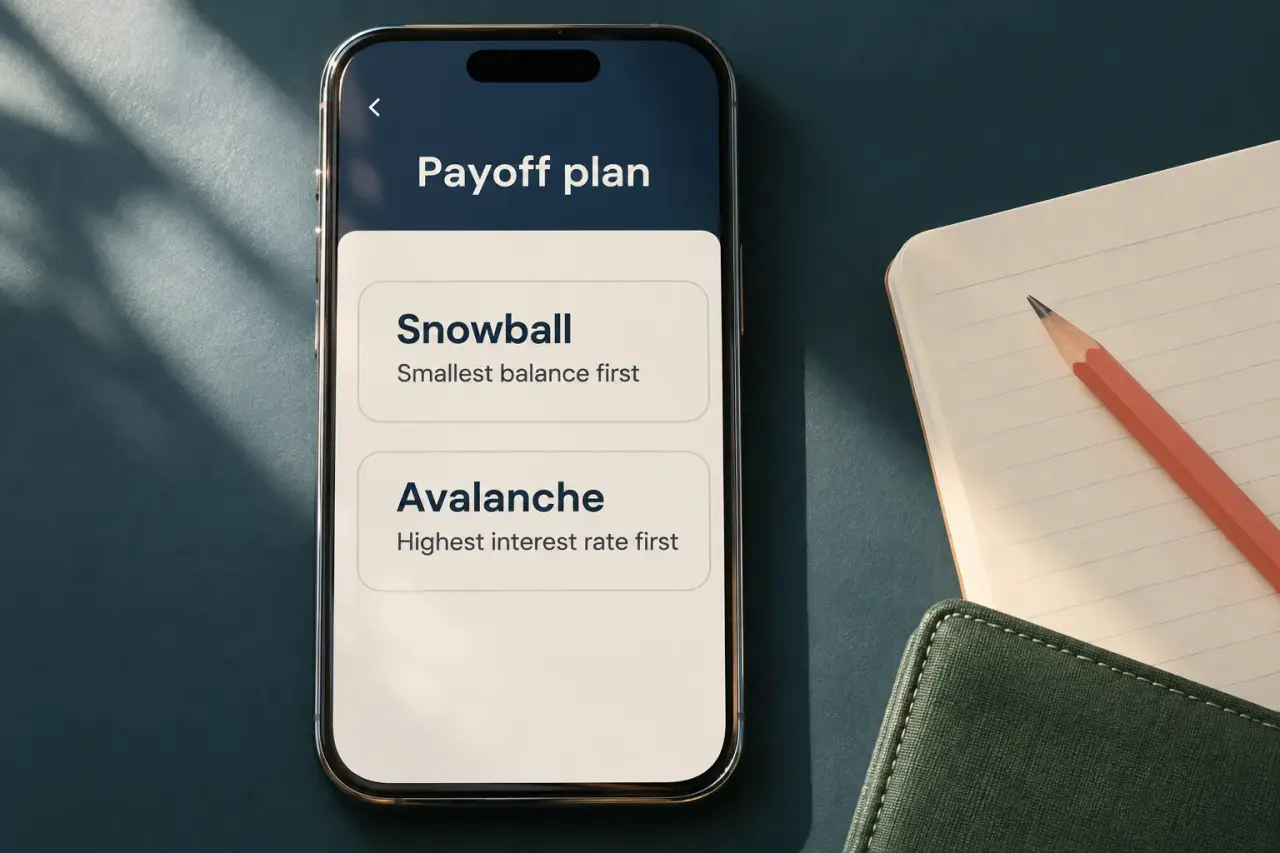
The snowball method focuses on your smallest balance first, no matter what interest rate it carries. This approach focuses on your smallest debt, with the goal to get rid of it as soon as possible. You keep on making the minimum payments on all of your debts, and you put any extra funds you have toward paying off the smallest debt. Once you've paid one smaller debt in full, dedicate that freed up money to the next smallest debt. That's the "snowball" — your payment amount grows as each small debt disappears.
The appeal here is psychological. You'll gain momentum and stay motivated as you see smaller debts drop away, while the avalanche method may require you to pay off a large debt first, which won't offer a feeling of gratification as quickly.
How the avalanche method works
The avalanche method ignores balance size and sorts debts by interest rate instead. The debt avalanche is a strategy in which you prioritize paying off debt based on the Annual Percentage Rate (APR) — starting from highest rate to lowest. You still make every minimum payment, but every extra dollar goes to the debt charging you the most.
The payoff is usually in dollars, not momentum. Saving money is also a worthy goal, which is what the avalanche method may allow you to do — paying off the highest interest rate first means you could save money in interest charges over time. The tradeoff: the downside is it can be hard to maintain momentum when the gratification you get from debt repayment towards smaller loans is delayed.
Which method actually saves more money?
It depends on your specific balances and rates — there's no universal number. One illustrative example from a debt counseling website showed an extra $300 monthly payment on four debts: the snowball method finished in 35 months paying $9,978 in interest, while the avalanche method finished in 34 months paying $8,637 in interest — a savings of $1,341 in that specific hypothetical scenario — treat it as an illustration of how the two methods can differ, not as a number you should expect to match. Your own numbers will look different depending on how many debts you have and how spread out the rates are.
Neither method is officially "better." As the CFPB frames it, this is a pro/con decision, not a right-or-wrong one — one can create quicker visible progress, while the other can eliminate the costliest loan first and save money over time. Some behavioral research cited in the personal-finance press also backs the motivation side of the snowball: concentrating payments on a small account has been linked to higher odds of sticking with a payoff plan.
Which apps calculate snowball vs avalanche payoff for you?
You don't need a finance degree to compare the two — a few tools will lay out both schedules side by side using your actual balances and rates:
Undebt.it is a free, web-based planner that lets you build a full payoff schedule under either method. It supports eight different payoff methods — including debt snowball, debt avalanche, highest monthly payment, highest credit utilization, and custom plans — and tracks your progress over time. You're not locked into one approach either; you can switch plans whenever you like.
Debt Payoff Planner and similar mobile calculators give you a payoff date calculator for every debt and a side-by-side comparison of debt snowball vs. avalanche methods, which is handy if you'd rather see a number on your phone than build a spreadsheet.
YNAB is a full budgeting app rather than a dedicated debt tool — it includes a loan payoff simulator to help you build a plan but focuses more on overall budgeting, so it's better suited to someone who also wants to fix the spending that led to the debt in the first place.
None of these apps lend money or negotiate with your creditors — they're calculators and trackers. That's worth knowing going in: a payoff app can show you the math, but paying down the balance is still on you, and any changes to your actual loan terms depend on your lender or servicer, not the app.
How to pick between snowball and avalanche
If you've stalled out before because debt felt endless, the snowball's quick wins might be what keeps you going. If you're disciplined about sticking to a plan and want to minimize what you hand over in interest, the avalanche usually wins on paper. Either way, the real engine behind both methods is the same: extra money, on top of your minimums, pointed at one debt at a time. A free calculator just helps you see the finish line sooner — and pairing it with a solid budgeting app can help you find that extra money to put toward whichever method you choose.